Build around the work that consumes time: editing, asset review, analytics, audio monitoring, file transfer, and keeping campaigns organized.
Estimated setup range$250–$4,500+Accessory planning range only. Computer, camera, drives, software, tax, and live merchant pricing are excluded.
Quick selector
How much media and multitasking does your work require?
Choose the closest fit. The matching plan is highlighted below; you can still compare all three.
Good · content essentials
$250–$700
Reliable audio monitoring and ergonomic daily control for writing, review, and light editing.
Sony MDR-7506 Professional Headphones
The Sony MDR-7506 has remained a dependable production standard because it delivers clear, detailed monitoring in a foldable, work-ready design. The wired connection avoids Bluetooth latency and makes it especially useful when recording with a camera or checking dialogue during editing.
The MX Master line is built around productivity rather than basic pointer movement. This model combines an ergonomic shape, fast precision scrolling, quiet clicks, an 8K DPI sensor designed to track on challenging surfaces, and controls for moving between devices. Those features are especially useful for business owners, editors, designers, and anyone who spends most of the day working across several applications or computers.
Add one-cable high-speed connectivity and storage expansion for larger creative assets.
UGREEN Maxidok Thunderbolt 5 Docking Station
This dock addresses a common workstation problem: a powerful laptop surrounded by separate hubs, adapters, chargers, storage enclosures, and network cables. Its 17-in-1 design brings those connections together, while the internal M.2 NVMe slot can add fast local storage without another box on the desk. It is especially compelling for high-resolution creative workflows, but buyers should verify their computer’s Thunderbolt and display limitations before purchasing because the host system ultimately determines which advertised capabilities are available.
The Sony MDR-7506 has remained a dependable production standard because it delivers clear, detailed monitoring in a foldable, work-ready design. The wired connection avoids Bluetooth latency and makes it especially useful when recording with a camera or checking dialogue during editing.
The MX Master line is built around productivity rather than basic pointer movement. This model combines an ergonomic shape, fast precision scrolling, quiet clicks, an 8K DPI sensor designed to track on challenging surfaces, and controls for moving between devices. Those features are especially useful for business owners, editors, designers, and anyone who spends most of the day working across several applications or computers.
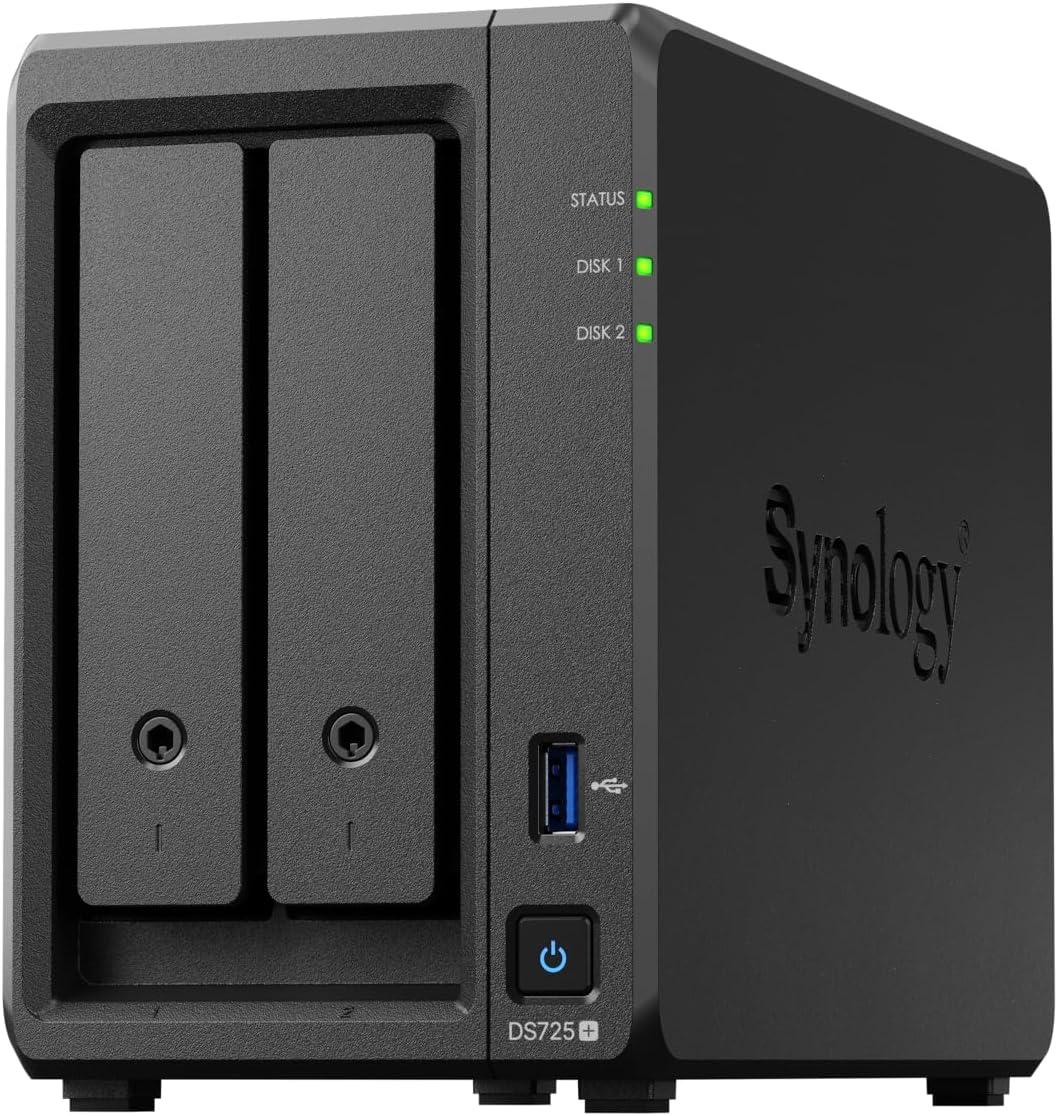
The DS725+ is a compact foundation for business backups, shared files, private-cloud access, and other always-on storage tasks. It combines two front-accessible drive bays with faster 2.5GbE networking, dual M.2 slots, and expansion support, giving a small deployment room to grow without starting with a large chassis. The diskless configuration also lets buyers choose drives for their own balance of capacity, endurance, and performance.
The WD6005FFBX is purpose-built for NAS duty and uses conventional magnetic recording (CMR), which is preferable to drive-managed SMR for sustained array writes and rebuilds. Its 6TB capacity is a practical starting point for a two-bay business NAS: two matching drives can support a mirrored layout while leaving meaningful space for backups, shared project files, media, and local AI assets. The important purchase decision is compatibility—not the label alone—so verify the exact NAS and software support before ordering, especially with newer Synology systems that may apply drive-list notices or restrictions.
The SNV3410-400G is designed specifically for sustained workloads in compatible Synology systems rather than general desktop use. Synology lists up to 3,100 MB/s sequential read performance, up to 1,000 MB/s sequential write performance, and an endurance rating above 1,000 TBW. For a supported NAS, the principal advantage is the combination of enterprise-oriented endurance, DSM-integrated health monitoring, and firmware updates that can be applied without removing the drive. It is most compelling when compatibility and predictable NAS behavior matter more than buying the least-expensive generic NVMe drive.
A high-memory mobile workstation with a wide visual canvas, high-speed I/O, central storage, monitoring, and efficient controls.
Apple 16-inch MacBook Pro with M5 Max and 128GB Unified Memory
This is the high-memory MacBook Pro configuration that makes demanding local MLX work practical without giving up portability. Its 128GB unified-memory pool can hold substantially larger quantized models than lower-memory Macs while serving both the CPU and GPU efficiently. That does not mean every model that nearly reaches 128GB is a sensible fit: macOS, applications, runtime buffers, context, and KV cache still need headroom. It is also a strong creator workstation, with an XDR display and high-bandwidth I/O for media, development, and multi-device production. It is excessive for light office work, and buyers should choose the memory and storage they need at purchase because neither is user-upgradeable.
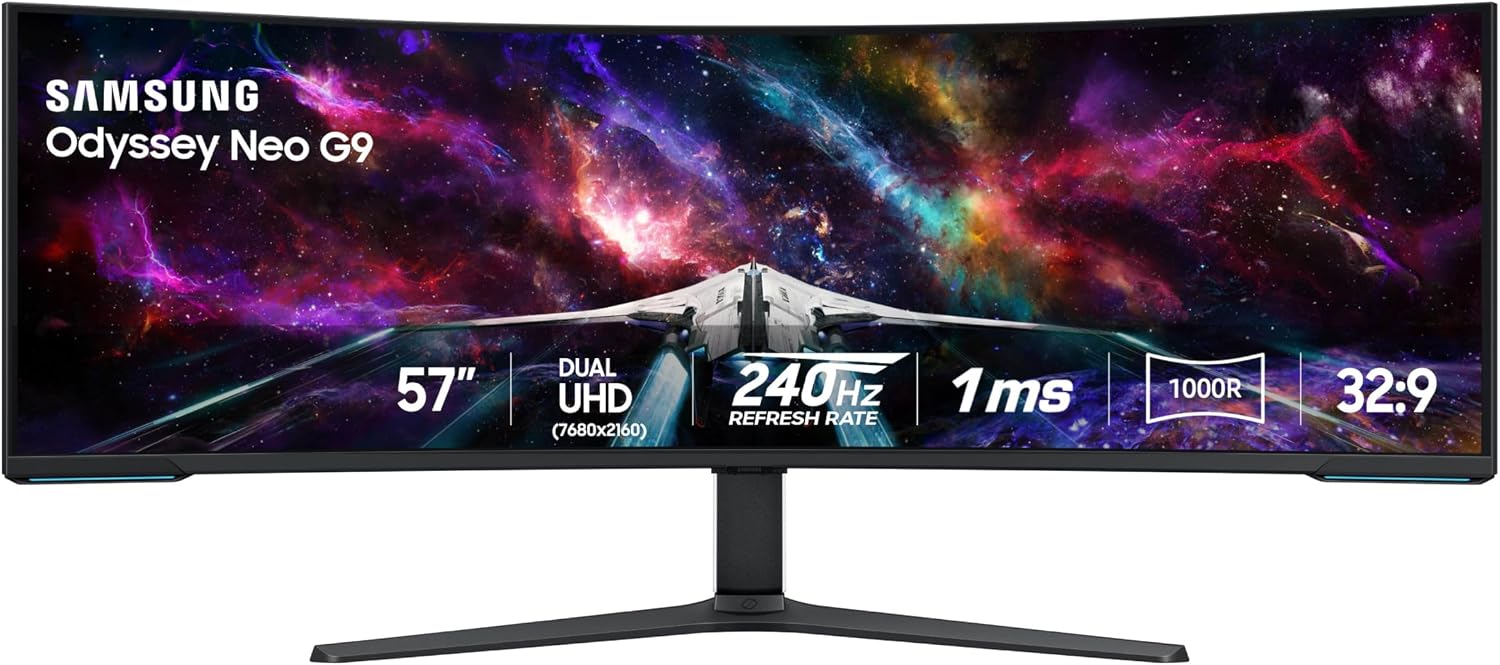
The 57-inch Odyssey Neo G9 replaces a dual-monitor arrangement with one continuous 7680 × 2160 workspace. Its 1000R curve, fast refresh capability, Mini-LED backlighting, and wide 32:9 format make it especially compelling for immersive gaming, simulation, editing timelines, analytics, and dense multitasking. It is a specialized premium display: buyers should verify that their computer can drive the desired resolution and refresh rate and that their desk can safely accommodate its substantial size and curve.
This dock addresses a common workstation problem: a powerful laptop surrounded by separate hubs, adapters, chargers, storage enclosures, and network cables. Its 17-in-1 design brings those connections together, while the internal M.2 NVMe slot can add fast local storage without another box on the desk. It is especially compelling for high-resolution creative workflows, but buyers should verify their computer’s Thunderbolt and display limitations before purchasing because the host system ultimately determines which advertised capabilities are available.
The DS725+ is a compact foundation for business backups, shared files, private-cloud access, and other always-on storage tasks. It combines two front-accessible drive bays with faster 2.5GbE networking, dual M.2 slots, and expansion support, giving a small deployment room to grow without starting with a large chassis. The diskless configuration also lets buyers choose drives for their own balance of capacity, endurance, and performance.
The WD6005FFBX is purpose-built for NAS duty and uses conventional magnetic recording (CMR), which is preferable to drive-managed SMR for sustained array writes and rebuilds. Its 6TB capacity is a practical starting point for a two-bay business NAS: two matching drives can support a mirrored layout while leaving meaningful space for backups, shared project files, media, and local AI assets. The important purchase decision is compatibility—not the label alone—so verify the exact NAS and software support before ordering, especially with newer Synology systems that may apply drive-list notices or restrictions.
The SNV3410-400G is designed specifically for sustained workloads in compatible Synology systems rather than general desktop use. Synology lists up to 3,100 MB/s sequential read performance, up to 1,000 MB/s sequential write performance, and an endurance rating above 1,000 TBW. For a supported NAS, the principal advantage is the combination of enterprise-oriented endurance, DSM-integrated health monitoring, and firmware updates that can be applied without removing the drive. It is most compelling when compatibility and predictable NAS behavior matter more than buying the least-expensive generic NVMe drive.
The Sony MDR-7506 has remained a dependable production standard because it delivers clear, detailed monitoring in a foldable, work-ready design. The wired connection avoids Bluetooth latency and makes it especially useful when recording with a camera or checking dialogue during editing.
The MX Master line is built around productivity rather than basic pointer movement. This model combines an ergonomic shape, fast precision scrolling, quiet clicks, an 8K DPI sensor designed to track on challenging surfaces, and controls for moving between devices. Those features are especially useful for business owners, editors, designers, and anyone who spends most of the day working across several applications or computers.
Planning ranges are estimates, not advertised prices. Verify current price, specifications, availability, and compatibility with the merchant before purchasing. We may earn a commission from qualifying purchases.
Before you buy
Compatibility comes first.
The MacBook Pro’s memory and internal storage are not user-upgradeable; confirm the linked configuration before purchase.
Check display and dock support against the exact computer and editing applications.
Plan enough independent backup capacity before centralizing large media libraries.
Wired monitoring is useful for editing, but it does not replace specialized room or broadcast monitoring.